Home » auto refinance

Auto Loan Finance Rates

piggy bank on a car seat
Green piggy bank money box in car interior, vehicle purchase, insurance or driving and motoring cost

-->
Home » auto refinance

How to Refinance a Car Loan to Remove a Cosigner

weighing different aspects when considering an auto loan refinance
Money and business concept car

-->
Home » auto refinance

Refinancing an Auto Loan with Bad Credit

two people talking about the pros and cons of auto refi

-->
Home » auto refinance
Woman standing at a table looking through paperwork
-->
Home » auto refinance

When is the Best Time to Refinance a Car?

money in hand

-->
Home » auto refinance


Navigating the world of auto financing can feel overwhelming, especially when interest rates seem to shift from month to month. Whether you’re shopping for a new vehicle, a certified pre-owned sedan, or looking to refinance an existing vehicle loan, understanding current car loan rates is essential for making smart financial decisions. These rates not only influence your loan payment but also the total cost of the vehicle purchase over time.

Understanding how lenders assess eligibility, how rates vary across different loan terms, and how to use tools like an auto loan calculator can help you secure the best possible deal—whether you’re financing your first vehicle or trading in for something new.

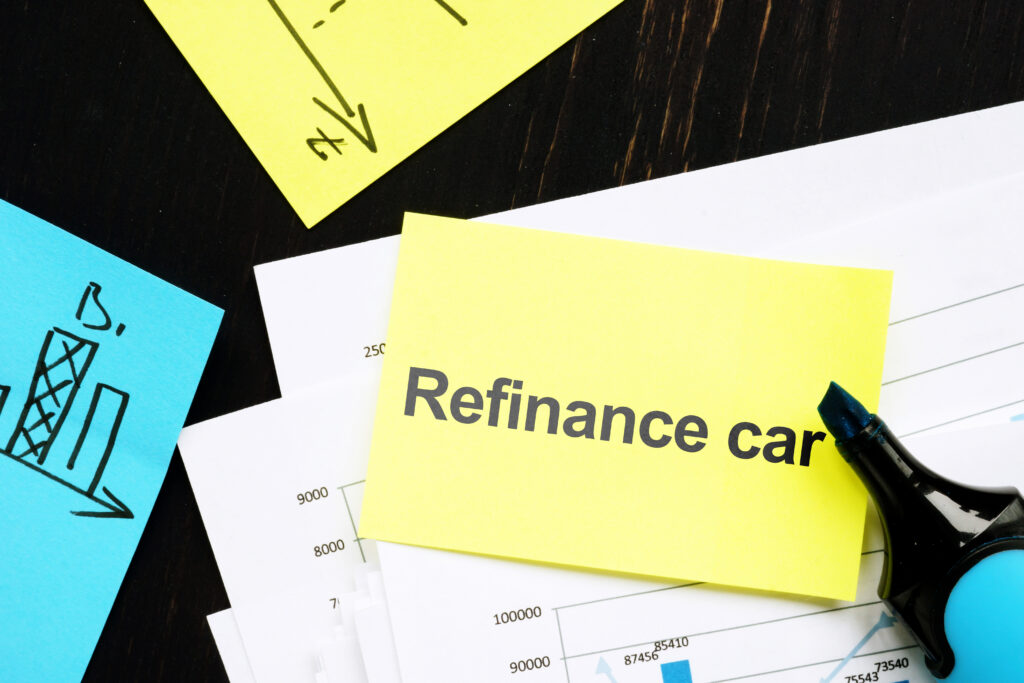
stick note with "refinance car" written on it. Current auto refinance loan rates.


What Are Car Loan Rates Right Now?

As of July 2025, current rates for car loans vary based on several key factors. Borrowers with excellent credit may see annual percentage rates as low as 6.6% on a new auto loan, while those with lower creditworthiness may face rates closer to 10% or higher. Used auto loans typically come with higher rates, often starting around 8.5% and climbing above 12% depending on the loan term and vehicle condition.

Auto loan rates are also shaped by the loan term itself. A shorter-term loan, such as 36 or 48 months, typically features a lower APR than longer terms like 72 or 84 months. Though monthly car payments are higher with shorter terms, the total interest paid over the life of the loan is significantly less.

Refinance loan options are available for borrowers who already have an auto loan and are seeking lower rates. Current refinance offers range from 7% to 10% depending on the borrower’s credit history, income, and the remaining balance on the existing loan.

How Credit Scores and Financial History Impact Rates

Creditworthiness is one of the most critical factors in determining your interest rate and loan eligibility. Lenders rely on your credit report and score to evaluate your risk level. A borrower with a high credit score and minimal debt is more likely to receive a favorable rate and broader payment options. Conversely, someone with recent missed payments, high credit card balances, or limited credit history may face higher rates and tighter terms.

In addition to your credit score, lenders often evaluate your checking account and savings account balances, monthly income, and debt-to-income ratio. These components influence both credit approval and the annual percentage rate you’re offered. Improving your credit by paying down personal loans or credit cards, avoiding late payments, and maintaining a low credit utilization ratio can lead to better auto loan rates and a smoother loan application process.


Getting Preapproved for a Car Loan

Before beginning the vehicle purchase process, it’s a good idea to get preapproved for financing. Getting preapproved gives you a clear understanding of what loan amount and terms you’re likely to qualify for, based on your current rates and financial profile. It also allows you to shop more confidently by establishing a firm budget that includes the purchase price, taxes, registration fees, and any optional warranties.

Most banks, credit unions, and online lenders offer preapproval tools through mobile banking or online banking platforms. These soft-credit inquiries won’t affect your credit score and can be completed in just a few minutes. Getting preapproved also strengthens your position at the dealership, allowing you to compare in-house offers with the rate you’ve already secured elsewhere.

Comparing New and Used Car Loan Rates

Interest rates are generally lower for new cars than for used ones. A new vehicle is typically easier to value, comes with a manufacturer warranty, and presents fewer risks to the lender. These factors contribute to lower annual percentage rates for new auto loans. By contrast, used vehicles—especially those several years old or with high mileage—can be more difficult to finance and often come with higher rates.

That said, a lower purchase price for a used car may result in a smaller overall loan amount. Used auto loans make sense when you’re trying to limit your financial exposure or keep car payments low. However, because of the higher rates and shorter warranties, it’s important to factor in total cost—not just the monthly loan payment—when deciding between a new or used car.


Understanding Loan Terms and Monthly Payments

Loan term length plays a major role in shaping your monthly car payments and total interest paid. While longer terms may make the vehicle seem more affordable month to month, they usually carry higher interest rates and increase the amount of interest you’ll pay over the life of the loan.

Let’s say you’re financing a $30,000 vehicle purchase. A 36-month loan might come with a rate of 6.3% and a higher monthly payment, but you’ll pay significantly less interest than you would with a 72-month loan at 7.9%. Many borrowers use an auto loan calculator to estimate monthly costs and total repayment amounts under different scenarios.

Lenders often set a minimum loan amount—usually between $5,000 and $7,500—but this can vary depending on the institution and vehicle type. Whether you’re financing a luxury SUV or a low-mileage compact car, choosing the shortest loan term you can comfortably afford is typically the most cost-effective strategy.

Where to Apply for an Auto Loan

There are several options for financing, each with its own pros and cons. Banks offer convenience, especially if you already have a checking account or savings account with them, but they may not always offer the most competitive auto loan rates. Credit unions tend to offer lower APRs and more personalized service, though you may need to meet eligibility requirements to join.

Online lenders can be appealing for their speed and digital tools, including auto loan calculators and instant loan application approvals. These platforms are especially useful for borrowers who prefer mobile banking or who want to compare offers quickly. Some lenders also integrate with car buying services, letting you browse vehicles and apply for financing all in one place.

Dealerships often provide financing as part of the sales process. While convenient, these loans can come with dealer markups unless they’re part of a manufacturer incentive. If you’re considering dealer financing, be sure to compare their offer with other lenders and evaluate the annual percentage rate, not just the monthly payment.

Special Loan Situations: Lease Buyouts and Refinancing

If you’re nearing the end of a car lease and want to keep the vehicle, a lease buyout loan allows you to purchase it for the agreed-upon residual value. Many lenders offer specific loan options for lease buyouts, which are often easier to qualify for since the vehicle’s condition and history are already known.

For borrowers with an existing loan, refinancing may be a smart move—especially if your credit score has improved or if current rates are lower than when you first financed the car. A refinance loan can lower your monthly payments, reduce your interest rate, or allow you to shorten or extend your loan term. Just be sure to factor in any fees or penalties that could offset the savings.

Trade-Ins, Down Payments, and Loan Structuring

Your trade-in value and down payment both reduce the total amount you need to finance. Putting more money down or trading in a vehicle with equity helps lower your loan-to-value ratio, which can improve your eligibility for a better rate. Some lenders require a minimum down payment, particularly for used vehicles or borrowers with lower credit scores.

Combining a high trade-in value with a strong credit profile and a sizable down payment puts you in a much stronger position to negotiate favorable terms. And if you’re buying through a car buying service or manufacturer partner, additional rebates or financing deals may apply.

Managing Your Loan After Purchase

After securing your loan, it’s important to stay organized. Use your online banking or mobile banking app to monitor your loan payment schedule, set up automatic payments, and track your remaining balance. Most lenders offer payment options such as biweekly schedules or extra principal payments, which can help reduce total interest paid.

If your circumstances change—whether through a job shift, unexpected expenses, or interest rate changes—many lenders allow you to explore alternate payment plans or deferments. Open communication is key, and maintaining a good relationship with your lender can keep your options flexible.

Curious about what your new auto payment could be? Check out your auto refinance options here.

-->
Home » auto refinance

Quick Answer:

Most people assume there is a restriction on the number of times you can refinance a car, but there is no legal limit. You can refinance your vehicle as many times as you want. However, that doesn't mean that you should refinance your car every chance you get. There are other factors to consider, such as the impact on your credit score and the amount of money you'll save.

Refinancing a car means taking out a new loan to pay off the balance of your existing loan. This can be done for various reasons, such as getting a better interest rate or a longer term. While there are some advantages to refinancing, there are still some risks. For example, if you extend the duration of your current auto loan, you pay more interest in the long run. And if you refinance multiple times, you could end up with a negative equity in your car (meaning you owe more than the car is worth).

Let’s explore why refinancing a car might be a good idea and some of the top questions people have about refinancing multiple times.

Table of Contents:

Why Would You Refinance a Car?

Most people refinance their car when they need a lower monthly payment or want to lower their interest rate. When you refinance your car, you take out a new loan with a new lender to replace your old loan. Remember that auto loan refinancing does not eliminate your debt. Still, it may help you get a lower payment or save on interest. And with auto debt continuing to rise, according to the Federal Reserve Bank of New York, it’s no wonder folks are trying to find ways to lower their payments.

Man leaning out of the driver side window with his arms crossed on top of the driver's side door. The text lists reasons why car owners would refinance, which is also outlined in the following paragraph

Let’s take a closer look at these three reasons to refinance a car.

  1. You can no longer afford your monthly payments. If you struggle to make your monthly car payments, refinancing may be a good option. By refinancing your car, you may be able to lower your monthly payments and free up some extra cash each month.
  2. You want to lower your interest rate. If you qualify for a lower interest rate, refinancing may help you save money on interest over the life of your loan. A lower interest rate could also help you pay off your debt sooner.
  3. You want to change the terms of your loan. If you originally agreed to a 60-month loan but now want to pay off your debt sooner, refinancing for a 48-month or 36-month loan could be a good option. Or, if you originally agreed to a 36-month loan but now want to lower your monthly payments, refinancing for a 60-month loan could be a good option for you.
Male hands with one holding a pen while typing on a calculator, while the other is on the keyboard of a laptop

Why Refinance a Car Again?

If you’ve already refinanced your car once, you may wonder if refinancing it again makes financial sense. The answer to this question depends on a few factors, such as your current interest rate, the terms of your new loan, and your financial goals.

  • High-Interest Rates – If you’re currently paying a high-interest rate, exploring the refinancing process may help you save money on interest over the life of your loan. For example, let’s say you have a $20,000 loan with an interest rate of 15 percent. Over 60 months, you would end up paying $6,000 in interest. However, if you could refinance for a lower interest rate of 10 percent, you would only end up paying $4,000 in interest, a savings of $2,000.
  • Change of Loan Terms – This is no different than the first time you refinanced. If you want to change the terms of your loan, such as the length of the loan or the monthly payments, refinancing may be a good option for you.
  • Financial Goals – If you have other financial goals, such as saving for a down payment on a house or taking a much-needed vacation, refinancing may help you free up some extra cash each month. For example, let’s say you have a $15,000 loan with an interest rate of 10 percent and monthly payments of $350. If you refinanced for a 60-month loan with an interest rate of 15 percent, your monthly payments would decrease to $308. However, you would end up paying $3,000 more in interest over the life of the loan, but the trade-off could be worth it if you need the extra cash each month to reach your financial goals.

Top Questions About Refinancing Multiple Times

If you’re considering refinancing your car for a second time — or third, or fourth, or… — you probably have questions about the process. Here are some of the top questions people have about refinancing multiple times.

How soon can you refinance a car?

There is no legal time limit on how soon you can refinance a car after purchase or a previous refinance. Still, some technical and administrative considerations might make it more challenging to do so.

Photo of a calculator in the foreground and a faded car in the background. Text lists things to take into consideration when financing which is also spelled out in the article below
  • Lenders’ Policies – The first consideration is the policy of the lender you used to finance your car. Some lenders have strict policies about refinancing and may not allow it within the first year or two of the original loan. In addition, if you try to refinance with the same lender, they may require you to pay a penalty before approving the new loan. This might make it more complicated and expensive to refinance soon after getting a car loan. Having said that, if you’re in a period where lenders are worried about auto loan default rates (like during an economic recession), they may be more willing to work with you on refinancing.
  • Vehicle Title Transfer – Another consideration is the transfer of the vehicle title. In most states, the title must be transferred from the old lender to the new one. This process can take two to three months, so it may not be possible even if you want to refinance quickly.
  • Refinancing and Your Credit Score – Finally, keep in mind that refinancing can temporarily ding your credit score. So if you’ve recently refinanced, you may not have the best credit and not qualify for great loan options again. That said, if you’ve been making your payments on time and have improved your credit, you may get a better loan this time.

Does refinancing a car mean starting over?

Rather than considering it as starting over, it’s more helpful to consider it a fresh start. When you refinance, you’re taking out a new loan and using the same car as collateral. The new loan amount may have different terms from the original loan, such as a lower interest rate, different monthly payments, or a different loan length.

Can I refinance if I have a low credit score?

While it’s possible to refinance with a low credit score, it may be challenging to get approved for a new loan. Lenders will typically look at your credit history, including your FICO score, and consider factors like the number of recent credit inquiries made by the credit bureaus, such as Experian, when deciding whether or not to approve your loan. If your credit score is low, it’s less likely you’ll qualify for favorable loan terms, like a low-interest rate, but refinancing can still be an option.

A generic credit score sheet with a pencil across the document and a pair of glasses sitting at the top

One way to improve your chances of getting an auto loan refinance with a low credit score is to have a co-borrower. A co-borrower is a joint applicant who shares ownership of the asset and is equally responsible for loan payments, which can help improve your eligibility and possibly allow you to qualify for better loan terms. However, it’s important that the co-borrower understands their role and is comfortable with the commitment.

Is it wise to refinance multiple times?

If refinancing means saving money or making your financial situation more comfortable, then it is smart to do it multiple times. However, if refinancing will only extend the life of your loan without providing any real benefit, you may want to avoid it. Also, consider the refinancing costs, such as loan application and title transfer fees, which can add up if you do it multiple times.

Does refinancing a car hurt your credit?

Refinancing your car will not permanently hurt your credit. Instead, it temporarily lowers your credit score because it triggers a hard inquiry on your credit report. However, your score may rebound after a few months if you make all your payments on time. For this reason, many people find that refinancing actually helps improve their credit score.

Does refinancing give you more money?

This depends on your refinancing terms, goals, and whether you’re searching for “more money” immediately, every month, or throughout your loan.

  • More Money Monthly – Lowering your monthly payments increases your immediate disposable income. But while it may seem like you have more money, you’re likely extending the life of your loan and paying more interest in the long run. That means that overall, you come out with less money long-term.
  • More Money Saved – If you’re looking to save money over the long haul, a more aggressive refinancing strategy with a shorter term and/or higher monthly payments may do it. For example, if you refinance from a 60-month loan to a 48-month loan, you may pay more each month which reduces your disposable income. However, you’ll save on interest and be debt-free sooner.

Can you refinance a car loan with the same bank?

Technically, this is possible. However, the same bank, credit union, or other lenders may not offer you the best repayment terms. Therefore, comparing rates and terms from multiple lenders is always a good idea before deciding on a loan.

When should you not refinance a car loan?

While there are many personal finance advantages and incentives to refinancing a car loan, there are also some situations where it may not be the best idea or you simply can’t due to rules and regulations with lenders.

  • Car Over 10 Years Old – Cars over 10 years old are generally refused by most lenders for refinancing. They typically only refinance loans for newer cars because they view them as having a greater resale value. As such, they see them as a less risky investment and are more likely to approve a loan for one of these cars. If your car is an older model, you might get approved for a refinance loan, but it will likely come with a higher interest rate. Alternatives to refinancing could entail taking out a personal loan or using the car as a trade-in when purchasing a new vehicle.
  • You’re Upside Down on Your Loan – If you owe more on your car loan than your car is currently worth, you may have difficulty refinancing your loan. This is because lenders typically only refinance loans for borrowers with equity in their vehicle — meaning the car’s value is greater than the remaining loan balance. If you’re upside down on your loan, you may be able to roll the negative equity into a new auto loan, but this will likely extend the length of your loan and increase your monthly loan payments. It also puts you at risk of once again being upside down on your loan in the future.
  • Your Loan Has Stiff Repayment Penalties – Before refinancing your car loan, check the terms of your current loan agreement with your current lender. Some lenders charge penalties — known as prepayment penalties — for borrowers who pay off their loans early. These penalties can add substantial amounts to the cost of refinancing your loan, so it’s essential to be aware of them before making a decision.
  • Refinancing Is Not Worth It – There are certain periods when it’s not financially advantageous to refinance your car loan. For example, if there are less than 12 months on your loan, refinancing costs may outweigh savings. Similarly, if interest rates have increased since you initially took out your loan, you may be unable to secure a lower rate. In these cases, it’s usually best to stick with your current loan.
  • You Have a Low Credit Score – Borrowers with a lower credit score may have difficulty qualifying for auto refinancing. Lenders typically only approve borrowers with high or good credit for refinancing products. If you have a low credit score, you may still be able to get approved for a loan, but it will surely come with a higher interest rate. This often negates the savings from refinancing in the first place, so it’s usually not worth it.

How do I know if refinancing is right for me?

The best way to decide if refinancing is right for you is to compare the terms of your current loan with the terms of potential new loans. Look at things like the interest rate, monthly payments, and length of the loan. It might be worth refinancing if you can get a lower interest rate or better terms. Consider all the costs involved in getting a new loan, such as application and title transfer fees. You don’t want to pay more in the long run just because you refinanced. Using a refinance car loan calculator is an excellent place to start your research.

The Bottom Line on Refinancing More Than Once

If you’re considering refinancing your car, there’s no limit to how many times you can do it. However, keep in mind the lender’s policy on refinancing, the administrative process of title transfer, and the impact on your credit score. Refinancing can be a great way to save money on interest or change the terms of your loan, but make sure to consider all the factors before making a decision.

-->
Home » auto refinance

Car and home purchases are typically the largest purchases that most people will ever make. Because of the cost of the average home or new car, most consumers take out a loan to cover all or part of the cost. 

Although both types of loans can take a long time to pay off, car loan terms can range anywhere between 24 and 72 months — sometimes longer. These payments can be a drain on your finances.

If you are currently paying off an auto loan, car loan refinancing can help you save money over the length of your repayment period, in the form of lower monthly payments or both. How much money you save depends on several factors including your goals, current interest rates and your creditworthiness.

stick note with "refinance car" written on it

What Is Auto Refinancing?

Auto refinancing is the process of changing the terms of your current car loan. If your refinancing application is approved, your lender issues you a new loan that replaces the one you had. The differences are in the loan terms. 

For example, you could refinance at a time when interest rates are lower than what they were when you took out your original loan, or you could qualify for a lower interest rate based on an improvement in your financial situation or credit score. 

Over time, you’ll save money as you repay your balance at the lower rate. You might also be able to shorten or lengthen the amount of time over which you’ll need to make payments.

person using a calculator and notepad

Understanding Your Savings

When considering a car loan refinance, it’s important to determine what your goals are. If you are looking to reduce the amount of money you pay over the length of your loan, you’ll either want to reduce the interest rate that you were locked into when you first entered into the auto loan financing process, reduce the number of payments left on your loan (even if it means making higher monthly payments) or both.

On the other hand, if you are dealing with financial issues and need to free up some cash every month, you might want to refinance so that the length of your auto financing agreement is longer but with smaller payments each month.

If you don’t secure an interest deduction with this type of auto loan refinance, you might pay more over time than you would have with your original financing deal. However, since your payments are smaller, you’ll have more cash each month.

credit report with a 672 credit score

Factors That Influence Savings

The amount of money that you can save depends on multiple factors, including:

  1. Current interest rates: Current interest rates have a huge impact on the cost of your loan. If interest rates were high at the time that you signed your original contract, but have gone down since then, refinancing could save you money. However, if interest rates have gone up, it could end up costing you more money to refinance.
  1. Your financial profile: A financial profile includes several factors that affect the loan rate and terms that a lender offers you. Credit scores are a large part of this. If your credit score has improved since you were approved for your current loan, you might find that refinancing now could get you better terms. 

And although your credit does have an impact on loan approval and terms, it isn’t the only factor lenders take into consideration. Your debt-to-income ratio (DTI) and loan-to-value ratio (LTV) on your current car loan are also factored in during the approval process.

  1. Loan length: In many cases, the fewer payments you make, the more money you save over time. However, if you are refinancing to free up cash for your monthly budget, a longer loan term might provide you with lower monthly payments. 
  1. Lender fees: Lenders often charge fees when you apply for a loan, and sometimes your current lender will charge prepayment fees if you pay off your loan early. These fees vary, but you’ll want to check with the lenders and factor them in when you are calculating the cost of refinancing your vehicle.
  1. Car condition and mileage: Your car’s current condition and mileage also factor in when applying for an auto refinance. The better condition your car is in and the lower the mileage, the more likely you are to get better loan terms.

To get an idea of what you might be able to save, try using a refinance car loan calculator to determine what your savings and monthly payments might be. Be prepared to provide the balance left on your loan when you use one of these calculators.

Shop Around to Find the Best Auto Loan

Everyone is different, of course, so it’s worth it to do some research, run some numbers and check your options for refinancing. If you decide to apply for refinancing, make sure you shop around for lenders to find the best interest rate and loan terms. You might be able to save money long-term while also reducing your ongoing expenses.  

-->
Home » auto refinance

Car loan refinancing can be a great way to reduce your monthly bills and save money as you pay off your car. A refinance loan is still a loan, however, so you’ll need to meet your lender’s requirements before you can be approved. 

Your chances of approval, as well as getting the most favorable loan terms, depend on several factors, but your credit score and history play a big role. 

Fortunately, there are many things that you can do to improve your credit before applying for auto refinancing. These include reviewing your credit reports and challenging errors, reducing your spending, keeping accounts open and not applying for new credit right before submitting your loan application.

credit report dispute form

1. Check Your Credit Reports

In a recent study on the accuracy of credit reports, one-third of study participants found errors on their reports. 

These errors could result in a denial of your auto financing loan application or an approval with less favorable terms, such as a higher interest rate. (This higher rate can cost you more money over time, and you can see how much by using a refinance car loan calculator.)

Fortunately, you have the right to check your credit reports and to dispute inaccurate information. All consumers are entitled to free annual credit reports and, in many cases, can request another free report under certain circumstances. 

It’s important to check your reports from all three major credit bureaus — TransUnion, Experian, Equifax — regularly, and particularly before you apply for car loan refinancing.

If you find errors, file disputes with the credit bureaus. Recheck your reports to confirm that your disputes were effective and that your credit history is accurate before beginning the refinancing process. Pay particular attention to the age of negative information on your credit reports. 

If the information is more than seven years old, you might be able to have it removed. Exceptions to the seven-year rule include bankruptcies, which can remain on your reports for up to 10 years, and judgments, which, as long as they are unpaid, can stay on your report until the statute of limitations expires.

On the other hand, if you find that the negative information on your reports is accurate, there might be things you can do to address the situation. If you can, pay off your balances. 

These accounts will update within a month or so, which might improve your credit score. You might also be able to work with creditors to settle your balances, which reduces your debt load but might negatively impact your credit score in other ways.

person using scissors to cut a credit card in half

2. Don’t Close Accounts

This can be a tricky one, particularly if you are very careful with your spending. Although it might seem reasonable to want to close credit accounts that you are no longer using, doing so can have a negative impact on your credit score. 

Credit scoring models consider several factors, including the age of your accounts as well as the amount of available credit that you are not using. Open accounts with low or no balances positively impact your credit. In addition, older accounts also impact your credit positively, as they show that you’ve been able to maintain an account for an extended period of time. 

3. Don’t Make Any Large Purchases

Because your available credit has a significant impact on your credit score, it is wise to forgo other large purchases before refinancing your car — unless, of course, you plan to pay for the purchase in cash. 

Taking out new or refi loans, or running up a large credit card bill, will affect your credit and reduce your chances of approval or getting a good rate.

4. Don’t Apply for Credit

Credit applications can result in what is known as a “hard pull” on your credit reports. This means that your credit history will show that you made a credit application. This can reduce your credit score. 

If auto loan refinancing is in your near future, refrain from applying for other credit products now. Even if you easily qualify for loans or credit cards, the inquiries, plus the opening of new accounts, can have a negative impact on your creditworthiness.

Be aware, however, that not all credit checks result in a hard pull or hard inquiry on your report. Some checks, also called “soft pulls,” are performed by utility companies, employers or banks that are considering you for a preapproval offer. 

These do not impact your credit score. If you are unsure about whether a business or organization is performing a hard or soft inquiry, ask before you consent to a credit check.

application form for a credit card

Take Steps to Improve Your Credit Today

Getting your credit in order before applying for a refinance loan doesn’t have to be incredibly complicated, but it can take time  — particularly if you must dispute information in your report or wait for your information to be updated. Planning ahead can be your best option for a successful auto loan refinance.

-->
Home » auto refinance

If you’re considering refinancing your car, you’re probably asking yourself “what is the easiest and cheapest way to refinance my auto loan?” If that leads you to wonder if you should ask your current lender to refinance your loan, there are some things that you should consider first. 

Can I refinance a car loan with the same bank?

Refinancing your car loan with the same bank or credit union that issued you the original loan is often a possibility since lenders don’t want to lose your business to a bank offering more competitive rates. 

However, not all lenders will allow you to do so, so you may need to check your lender’s policies. It may also depend on changes to your financial profile and credit score since you were granted your original loan. 

How Long Do I Have to Wait Before I Can Refinance My Auto Loan?

With auto loan refinancing, there is no official waiting period required between taking out a loan and refinancing it. You can refinance your loan as soon as you can find a lender willing to do so. 

However, you might have a hard time convincing your current lender to refinance your loan if you just recently took it out. That’s unless loan rates drop quickly and they are afraid to lose your business to a different lender.

The Pros and Cons of Refinancing With the Same Bank

When done responsibly, refinancing your car loan could come with many pros, like lower monthly payments, and very few cons. You most likely won’t even lose your car’s warranty should you decide to move forward with refinancing, but make sure to confirm with your provider beforehand.

However, refinancing your auto loan with the same lender offers a unique set of pros and cons that could affect your financial situation. 

Let’s examine the pros:

  • You might have less paperwork to fill out. Since your lender already has you on record as a borrower, you might have to provide less information in order to refinance your existing loan. This could save you paperwork and time, but that all depends on the lender and their underwriting policies. 
  • You might be more familiar with your current lender’s policies and customer service. If you’ve been using your loan provider for some time, you’re likely familiar with their policies and customer service. If you like your current lender, refinancing your loan through them ensures that you keep the same great service. 
  • Your loyalty might be rewarded with discounts. In an effort to keep you as a customer, a bank might offer you discounts on fees and interest rates when you refinance with them. You will need to contact your lender to ask them if they offer any refinancing discounts for existing customers.
  • You might be able to keep your online account. Keeping your current lender usually means that you can keep your online account and the documents stored within it. This will keep you from needing to learn a new lender’s systems and keep all of your auto lending documentation in one place; that way you have less to keep track of.

Now, let’s examine the cons:

  • You might miss out on lower interest rates and loan terms. Refinancing with the same bank, although convenient, isn’t always best if you’re after a better interest rate. If your loan terms are the reason you’re refinancing, it’s likely that you can find a loan company that will beat the loan terms that your current lender will offer you in their refinancing offer. 
  • Your current lender might charge prepayment penalties. Prepayment penalties help keep lenders from losing out on profits should you close the loan early. If your lender requires them, this will need to be paid before you can proceed with another loan. 
  • If you don’t like your current lender’s service and policies, refinancing with them will prolong your bad experience. If you don’t like your current lender’s service or policies, refinancing your car loan with them will only mean that you have to deal with them longer. 

Whether the pros or cons weigh heavier with you is based on your individual situation.

Is It Cheaper to Refinance an Auto Loan Through Your Current Lender?

Even though there is a possibility that refinancing your current loan through the same lender can save you some time, it might not save you much money. In fact, it might cost even more, since some lenders charge prepayment penalties. 

A prepayment penalty ensures that the lender receives at least some of the profits that they would make off the interest of the original loan, should it be cut short because it’s paid off early. 

These penalties are often 2% of the outstanding loan balance. So, if you refinance your $10,000 loan and your lender charges a 2% fee, you’ll pay $200 just to pay off your loan early and replace it with a new one. 

Plus, even if your lender offers you a discount on fees required to close on your new loan, the savings might not outweigh what you’ll save on interest with a better loan. 

It largely depends on factors like your financial profile and credit score, and whether or not they have improved since you originally took out the loan. You don’t need a perfect credit score to refinance your loan, but if it’s not very high, you should try to improve it even slightly before you consider refinancing. 

To find out how much money you could save by refinancing your auto loan, you can use our auto loan refinance calculator to estimate potential savings. 

Is It Easier to Refinance an Auto Loan Through Your Current Lender?

Whether or not refinancing with your auto loan’s current lender is any easier than doing so elsewhere depends on your experience with your lender. If you have made consistent, on-time payments throughout the life of the loan and have a positive credit history, refinancing with them will likely be straightforward. 

Depending on your lender’s refinancing process, this could mean that you don’t have to fill out a lengthy application, provide as many financial documents, or learn an entirely different online platform for managing your loans. 

On the other hand, if your lending experience has been difficult, especially if you have missed or late loan payments, you can expect that the refinancing process might be as well. 

If your lender finds you to be a higher credit risk, your refinance offer from your current lender might not be the best. Luckily, you have many other refinancing options.

Should You Refinance Your Car Loan With the Same Lender?

Whether or not you should refinance your car loan with your current auto lender depends on if there is a better refinancing deal out there for you. To make sure that you don’t miss one or have to refinance more than once, you should compare loans offered by multiple lenders to your current lender’s refinance offer. 

Shopping through a marketplace like AUTOPAY lets you compare loan terms from multiple lenders, so you can feel confident knowing that you’re getting the best deal. To find the best refinance loan for you, start by filling out our auto refinance form.

How to Know if You Shouldn’t Refinance With the Same Lender

You’ll know that you shouldn’t refinance with your current lender when you find a refinance offer that beats the one that your current lender offers. Since lenders are always looking to attract new customers, it’s likely that there’s a lender out there willing to give you better terms. 

If the terms of your loan aren’t your reason for refinancing your auto loan, a negative experience with your lender might be. Whether that negative experience is a bad customer service experience or unexpected fees, you shouldn’t refinance with the same lender if you haven’t been happy with your lending relationship.

How to Refinance Your Auto Loan With the Same Lender

When you refinance your auto loan through the same lender, you can expect the process to be similar to that of applying for your original loan. However, each lender will be different. You can expect the refinancing process through your current lender to look something like this:

  • You will fill out an application. Your lender should have all of your personal, loan, and vehicle information on file, like the current loan amount and if you have a cosigner. So, the application process for current borrowers is often simple, but it kicks off the rest of the process. This is your chance to update any financial or personal information that might affect whether you will be approved or denied for refinancing. 
  • Your lender will review your eligibility. Once your lender has received your application, they will work to figure out if you qualify for a new loan. To do so, they will review your proof of income, credit history, current auto loan standing, vehicle value and more. 
  • You will receive your lender’s decision. Once your lender has determined whether or not you qualify, they will issue you an approval or denial. This can come by way of email, phone call, an in-person discussion or even a text, so make sure to confirm which method your lender will use before decision day. 
  • If you’re approved, you’ll follow your lender’s instructions to close on the loan. Depending on whether you are working with an online lender or an in-person one, your lender will either instruct you to complete the loan process online or to meet them in person. During this process, you should be prepared to sign the loan contract and provide any last-minute documents that your lender might need. 
  • Your loan funds will be distributed. If you’re refinancing through the same lender, they’ll handle paying off the old loan and bringing your balance back to current, so you won’t need to handle distribution. 

All in all, refinancing an auto loan should not take more than a couple of weeks from start to finish. 

-->

* This value was calculated by using the average monthly payment savings for our customers from [payment_savings_range].

** For well-qualified borrowers.  Rates are subject to change and may not be available in all states. Customers must meet income qualifications, debt to income requirements and other vehicle restrictions such as loan to value, age, and mileage.

© The Savings Group, Inc., All Rights Reserved